
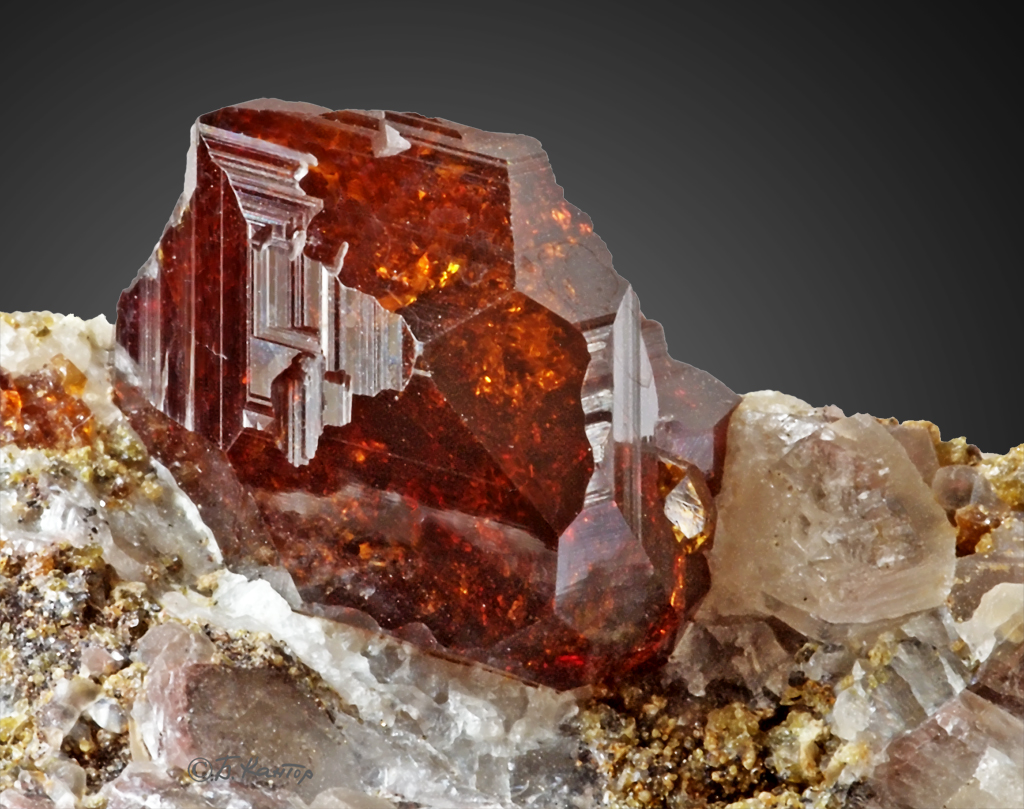
GARNET is a group of silicate minerals with diverse colors, hardness (6.5 to 7.5 on the Mohs scale), and uses. They’ve been used as gemstones and abrasives since ancient times. Garnet’s hardness and lack of cleavage make it suitable for industrial abrasive applications, while its chemical stability makes it useful in filtration systems.

Properties:
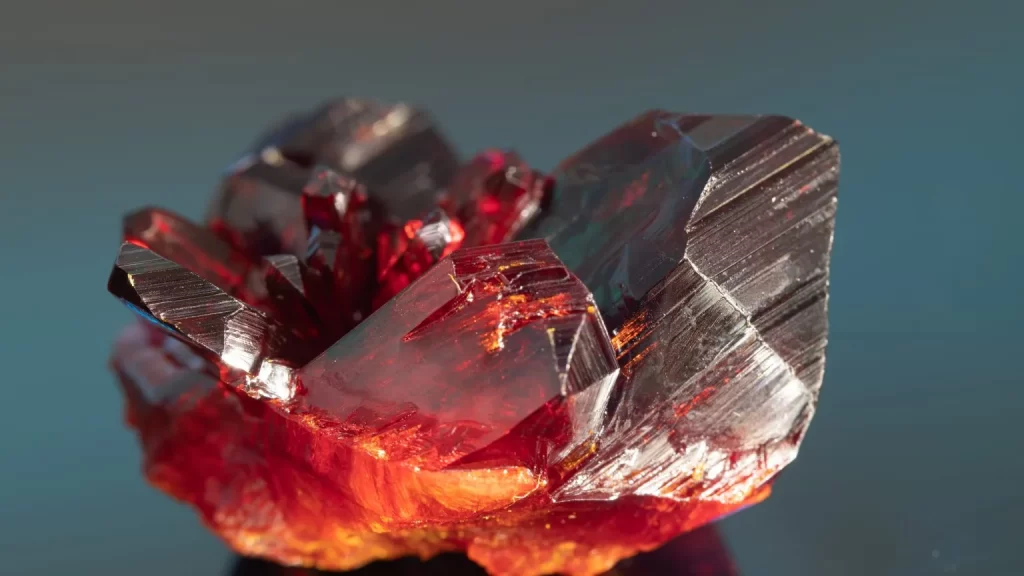
Color: Garnets can be found in a wide range of colors, including red, orange, yellow, green, purple, brown, black, and blue.
Hardness: Mohs hardness of 6.5 to 7.5.
Luster: Vitreous luster.
Tenacity: Brittle.
Diaphaneity: Transparent to translucent.
Cleavage: Lacks cleavage.
Specific Gravity: 3.5 to 4.3.
Chemical Composition: While sharing similar physical and crystallographic properties, garnets exhibit a range of chemical compositions, defining distinct species.
Uses:
Gemstones:
Garnets have been used for jewelry and ornaments for thousands of years.
Abrasives:
They are used in sandblasting, water jet cutting, polishing, and as coated abrasives. Garnet is a safer alternative to silica sand in sandblasting operations due to health risks associated with silica.
Filtration:
Garnet granules are used as filter media in water purification and wastewater treatment.
Industrial Applications:
Garnets are used in industrial blast-cleaning, filtration, and water jet cutting.
Lithium-Oxide Garnets:
These are being researched for their potential use as electrolytes in rechargeable batteries.
Other Uses:
Garnet is used in skid-resistant road aggregate, skid-resistant paints, and as concrete filler in harsh environments.
Types of Garnet:
Pyralspite series: Includes pyrope, almandine, and spessartine.
Ugrandite series: Includes uvarovite, grossular, and andradite.
Notable varieties of grossular: Hessonite and tsavorite, For any enquiries about garnet deposits, mining and supplies please Contact Us.